Monday, July 17, 2006

Click, click, click


5 am. The racket of the birds in the trees awakens me and I stare with content at the ceiling. My wife snores softly beside me.

The racket stills and I hear a soft pop, pop, pop.
A firefight, not ours, but not distant either.
I'm back in the jungle again, waiting in ambush, 18 and scared,
staring into darkness so deep that it hurts the eyes,
102 degrees and rain like pea gravel falls on my head.
Jungle rot eats away at my dick.
The pain is unbearable, but I remain frozen.

Something snaps and the H-man click, click, clicks the Claymores.
Blue and yellow muzzle flashes light the narrow path,
I scream but don't make a sound.
I can't hear the men dying.
Can hell be any worse than this?

"Daddy, daddy," my daughter cries. "You were screaming." The birds are singing again. "Everything's fine, sweetie," I say. "Come into bed with us. Everything is fine."

Wednesday, May 03, 2006

Marking the Ballot

Time for another Oregon election, time for marking our ballots. I should say up front, in local races, my primary focus is on the environment and education. With that being said, here's how I voted:

Governor: Ted Kulongoski

Kulongoski is the man Oregonians love to hate. Nobody seems to be sure exactly why, he's spent most of the past term mixing in with the wallpaper. Maybe his blandness is a magnet for our frustrations. To be honest, there just isn't anyone on the Democratic side that I can support. I had an opportunity to glimpse Jim Hill in the state legislature a few years back and found him to be Arrogant with a capital 'A'. The other contender, Pete Sorenson, is a complete lightweight. In Kulongoski's defense, I do think he did a decent job of guiding the Oregon economy through the Bush-induced 2001 recession. If Westlund gets on the fall ballot as an independent, I'll reconsider how I'll vote, but for now, Kulongoski is my guy.


City Council, Position 2: Erik Sten

Last week, I met with Commissioner Sten regarding some police oversight committee business. I wasn't sure if I would like him, I'm still not sure, but I did find him to be straight forward, savvy, and astute. Another factor in his favor, is that he's been willing to go after Portland General Electric and Enron hammer and tong. His chief rival, Ginny Burdick, is a shill for the Portland Business Alliance. Portland is one of the most livable cities in the nation because business doesn't completely rule city government. I hope that doesn't change.


City Council, Position 3: Dan Saltzman

Saltzman's albatross is a hare-brained idea to cover the city reservoirs. But other than that, he's provided sound leadership for our city. Besides, anyone that's willing to take a crack at the Police and Fire Disability and Retirement program has my vote.

City Auditor: Gary Blackmer

Gary is running unopposed, so he doesn't need to worry about reelection, but I'd like to say that working with him has been a pleasure. He's smart, honest, dedicated and knows his business inside and out.


County Commission Chair: Diane Linn

This one was a very close call for me. Diane Linn has absolutely no finesse when dealing with sensitive issues or it seems with her fellow Commissioners. She may have done more harm than help with her approach to the gay marriage issue, but I people tend to forget that she wasn't the only commissioner pushing that issue. Gay marriage is a concept whose time has come and that I support whole-heartedly, Linn just tried to sneak it in the side door and got caught. I think she's made a strong commitment to the environment and trying to find funding for local schools. An environmental wonkette friend of mine urged me to vote for Ted Wheeler, but his only claim to fame is millions in the bank and a lack of governmental experience. The Oregon League of Conservation Voters endorses Linn. I agree.

US House, District 3: Earl Blumenauer

Running unopposed. He's quietly effective and a strong advocate for Portland and the environment. If the Dems take over the House, he'll be well-placed in the House hierarchy.

Thursday, April 20, 2006

Names from my spam filter

Writers struggle thinking up names of characters. Here's a list of names that have recently shown up as senders in my e-mail spam folder:
Calehall U. Candor
Elma Grupps
Maurice Simons
Roselle Baron
Esyllt DeWolf
Rameses Varnum
Rufus Metcalf
Malcolm Ratliff
Hopefullness V. Hysteria

Who knew that spammers were so creative?

Sunday, April 16, 2006

O Give me a home


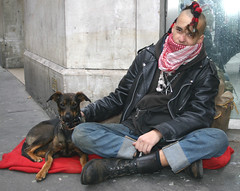
I always know when the Rose Festival is around the corner when the cops roust homeless people camping underneath the Steel Bridge. With nowhere else to go, homeless folks trudge out to the suburbs or camp in the blackberry bushes on the slopes along the Banfield Freeway. Out of sight, out of mind is our city motto.

Cops don't enjoy this task, they have better things to do with their time, but the city fathers and business interests have decreed that we can't have down and out people with their shopping carts and sleeping bags sullying the image of this fair city. Things might be different this year, though. The Ninth Circuit Court of Appeals has ruled that arresting the homeless for "sitting, lying or sleeping in public access areas is unconstitutional." Being homeless is not a crime. What a concept. This has to be a real headache for the Royal Rosarians. What to do with all those homeless folks now?

I did a couple of tours in Diginity Village, a homeless camp, teaching creative writing to the residents. Many had problems of one sort or another, but almost all wanted the chance to make something of their lives. A homeless woman in my class, Laura, told me "don't believe the guys on the freeway onramps saying they want money for food. I've gained 20 pounds here since I moved to Portland standing in one line or another waiting to be fed. What I learned is that everyone is willing to feed the homeless, but they aren't willing to give them a place to stay. There are an estimated 2500 to 3000 homeless people are here in the Portland, maybe 500 more come in the summer when the kids are on the move, but there are only 200 shelter beds total for everyone. Dignity Village hosts another 45 residents and can handle ten more using flop space on the couches. If homeless in Portland and you're a single woman or man, you're pretty much out of luck for finding a safe place to spend the night, ditto for childless couples. Families may find a spot if they're lucky, but if dad's around, he's probably going to end up separated from mom and the kids.

Portland's No Camping ordinance is similar to LA homeless law struck down by the Court of Appeals and may be unenforceable. This year, the Rose Festival may have some unwanted local color (at least unwanted by some), but maybe this is just what is needed to make Portland put some resources into helping the homeless get off the streets.

Monday, April 03, 2006

What a Shocking Development


Recently in Portland, a man under the influence of cocaine was subdued by a police officer wielding a taser. The man subsequently died while being treated by medical personnel. The State Medical Examiner stated that:

"I have come to the conclusion that [Timothy] Grant died of a cocaine overdose with excited delirium and taser application was not a cause of his death," said Oregon State Medical Examiner Karen Gunson. "Would he have died without the taser? Yes, in my opinion."
Amnesty International has called for a moratorium on the use of tasers by law enforcement in the United States pending further research into taser related deaths. The Medical Examiner concluded that Mr. Grant died of cocaine delirium. Cocaine delirium has also been associated with in-custody deaths related to positional asphyxia in which a person might die of asphyxia (or suffication) usually an intense struggle with police.

I'm not a big fan of tasers; their use should be limited, but I don't think that the community can expect police officers to do a dangerous job without allowing them to employ adequate tools. People under the influence of drugs or those with mental illness are at times almost impossible to control. Police officers are taught to use a use of force continuum in effecting an arrest. The continuum is as follows:

a. Officer presence, uniform
b. Verbal Commands [military orders in reality]
c. Control holds - Come-a-longs and wrist locks.
d. OC - pepper spray/mace
e. Batons
f. TASERS
g. Deadly force

Control holds and batons are pain compliance techniques. You twist someone's arm or thump them on the fatty part of the thigh with a baton, the person is supposed to do what you want because they want the pain to stop. Pepper spray and tasers hurt, but they're also supposed to incapacitate an individual. Sometimes they do, sometimes they don't. The more whacked out a person is on drugs or alcohol, the less effective pepper spray may be. The same holds true for a person suffering from mental illness or defect. A person affected by drugs or mental disease may be unusually strong and resistant to pain. A single officer or pair of officers may be physically unable to restrain such a person. If officers are prohibited from using tools such as pepper spray, batons and tasers and their ass is getting kicked, then deadly force may be their last and only option. What an ugly news story that will make.

The use of tasers must be limited by policy and stricter polices are needed than are currently in place. Tasers should not be used on children, the elderly, pregnant women, the disabled, or persons known to have a heart defect. Repeated use should be prohibited except under strictly defined circumstances. Training should be expanded and every instance where a taser has been employed should be reviewed for adherence to policy and procedure.

Tuesday, March 14, 2006

Good night, Good luck

My recollection of Edward R. Murrow is hazy. I remember him best for his deep, soothing voice, his chain-smoking and his show, Person-to-Person. I remember Marilyn Monroe and Joe Dimagio (or was it Arthur Miller) showing off their home. "This is our bedroom, Ed," she said. Yikes! Heady stuff even for a five year old. Joeseph McCarthy is less memorable, a man who seemed yucky, like some evil uncle that you intuitively knew to avoid. We never did the duck and cover in elementary school. The high desert of Central Oregon was too far out in the sticks for the Russians to waste an atomic bomb. But I do remember going with my mother on crisp February mornings to the cinder block house on the ridge behind the new hospital where we watched the skies for commie bombers. We had binoculars and a flip book to identify military aircraft: Russian /Bears and American B-whatevers. My mom used the clipboard to note American aircraft. There was a black phone there, maybe to call the Strategic Air Command if we were invaded, though I suspect it would be too late by then. Everybody was a little scared then, but the real consequences seemed to fall on someone far away, so there seemed no need to take action, to stand up.

The fear inspired by McCarthy and his cronies is little different that what the neo-cons use today to control the public. We must stop terrorists they say, when in actuality, we are less safe now than before 9-11. Those who dissent are intimidated and silenced by personal attacks. Real problems are ignored. We attack the wrong targets for the wrong reasons and money flows into the hands of the few. Maybe, just maybe, Bushes' house of cards is beginning to collapse, but for the young men and women dead in Iraq,just like for those crushed by the blacklists and the Senate Inquisition, relief comes too late.

Friday, March 10, 2006

Kick Ass and Take Names

So the a cop has stopped you, nailed you for a $398 speeding ticket and to top it off called you a cheese head and you're not even from Wisconsin. Cheesehead, indeed. You want to complain, but you're wondering about the stories from south Florida when citizens were intimidated by supervisors when they tried to file complaints. What do you do?

1. Know what to complain about.

Don't complain about getting the ticket or the cop towing your car or confiscating your dope. You need to allege misconduct or illegal behavior: the cop called you a cheesehead, beat the crap out of you or asked for a bribe. That's misconduct.

2. Document the incident.

Write down what happened as soon as you can. Get the names and addresses of witnesses. If it's your word against the cop's, then you'll probably lose. Independent witnesses bolster your case. Oh yeah, pictures and videos are killer evidence.

3. Know where to complain.

Police departments have three general systems for gathering complaints. In Portland, we have an Independent Police Review that is part of City Auditor's Office, not the Police Department. This bureau takes all complaints against the police, does a primary investigation and refers complaints of misconduct to the Internal Affairs Division of the Portland Police Bureau. This model is becoming prevalent in larger cities such as San Francisco, Omaha and Denver. In my opinion, this is the best way out there for local governments to handle complaints against police officers. The second method is that all complaints are forwarded to the Internal Affairs Division. Apparently if you live in Florida, you may get some grief if you try to score a complaint form. Go to Internal Affairs directly. Don't let a uniform sergeant intimidate you. The third and weakest system is having a supervisor take the complaint. If you're faced with this, good luck. Some supervisors are honestly concerned about your complaint, but some just want to get you out the door. Try to talk to someone higher in the food chain, a lieutenant or the Chief, even if you have to wait until the next day. And if you're drunk or stoned, wait until you're straight to file that complaint. It'll be harder for them to blow you off.

4. Get help

As an ex-cop, I shudder to give this advice, but if you're being stonewalled, check out other agencies or organizations that might help: the ACLU is interested in cases with constitutional ramifications, many ethnic assistance groups may help you, and dare I say it, there are some groups that focus on promoting police accountability. In Portland, Cop Watch is the place to go.

5. Don't give up.

If you really think that you've been on the receiving end of misconduct, don't let a lower level police supervisor dissuade you. Keep plugging away and make sure that your complaint is accepted.

6. Be realistic.

If it's your word against the officer's, chances are not much will happen. But, complaints against police officers are like green stamps. If they collect enough of them, they get a big surprise in the end.

Monday, March 06, 2006

Book recommendation: Pavane by Keith Roberts

Anthony Burgess named Pavane as one of the 99 best novels of the 20th century. Pavane is an alternate history that wonders what if Queen Elizabeth I had been assassinated in 1588? What if the Spanish Armada defeated England. What if the Catholic Church dominated most of known world into the Twentieth century? Then perhaps, the Church would limit technology to 19th century levels, to steam locomotives and primative radios. Perhaps many would worship the old gods, and an idyllic countryside might hide growing discontent and darkness.

This novel works for a couple of reasons. First: Roberts could write as well as any literary novelist:

At three in the afternoon the engine sheds were already gloomy with the coming night. Light, blue and vague, filtered through the long strips of skylights, showing the roof ties stark like angular metal bones. Beneath, the locomotives waited brooding, hulks twice the height of a man, their canopies brushing the rafters. The light gleamed in dull spindle shapes, here from the strappings of a boiler, there from the starred boss of a flywheel. The massive road wheels stood in pools of shadow.

Through the half-dark a man came walking. He moved steadily, whistling between his teeth, boot studs rasping on the worn brick floor. He wore the jeans and heavy reefer jacket of a haulier; the collar of the jacket was turned up against the cold. On his head was a woolen cap, once red, stained now with dirt and oil. The hair that showed beneath it was thickly black. A lamp swung from his hand, sending cusps of light flicking across the maroon livery of the engines.

Secondly, Roberts uses linked short stories to tell an epic tale in an understandable manner. Some have criticized Robert's use of linked short stories, as being too simplistic or muddled, but I think they may not understand that linked short stories provide a whole greater than the sum of the parts. No only is there a story arc in the individual stories, but a greater arc when the stories are taken together. Linked short stories are one of my favorite forms of storytelling. Check out Love Medicine by Louise Erdrich, Annie John by Jamaica Kincaid or The Things They Carried by Tim O'Brien. They're all great literary novels.

Oh yes, a word of warning. I didn't perceive the book as being anti-Catholic, but devout Catholics may not like how the Church is portrayed. Hey, I'm a lackadaisical Unitarian, what do I care?

Friday, March 03, 2006

What gripes my ass Friday--Ann Coulter

I was going to take a pot shot at photo radar for this column, then I stumbled across Ann Coulter's diatribe on the Oscars. Her rant is designed not to amuse or inform, but to offend. The column is racist, homophobic and facist. This is the woman that believes that Joseph McCarthy is just a poor persecuted right-thinking patriot. I'm not sure if she says these things for effect, or if she really believes the horse shit that flows from her mouth. I don't subscribe to the notion of hell, but if I'm wrong, one consolation is that Ann's scrawny bleached-blond ass will sizzle there like pork sausage on a short order grill.

Har! Har! Har!

"Michael."
". . . and another thing you bitch . . ."
"Michael!" the Doctor says raising his voice.
"Yes, sir," I say.
"Put down the keyboard. We've talked about throwing things, haven't we?"
"Yes, sir." My keyboard suddenly feels heavy in my hand.
"Have you taken your meds today?" he asks.
"Well . . ."
"They will make you feel much better. Ranting about that nasty old Ann Coulter makes you feel all yucky inside, doesn't it?" Doctor Frankenstupe holds out some pills for me: one fat yellow one and one tiny blue one.
"Could I have two blue ones?" I ask. "They'll help calm me down."
"Just this once," the Doctor says. After I take the pills, he waves at me with three fingers and shuts the door. I spit out the yellow pill and flush it down the toilet.
"I feel much better now," I say to no one in particular after the blue pills kick in.

Tuesday, February 28, 2006

Good-bye Crystal Corral

You've drifted off the Interstate and into an alternate version of Americana. The two in the backseat, your son, Derrick and mother-in-law, Emily, have talked you into this little excursion down US Highway 26. You're somewhere in the far side of Oregon; the side with no tourists, passing little burgs like Prairie City and John Day and Moores Crossing. You never knew Oregon was this varied; pine forests and mountains and juniper and sage deserts. You wife, Susan wanted to visit the Painted Hills, and though you grumbled, you're glad you did.

Moving up the slopes, the snow became fierce. Crossing the Ochoco Summit was tricky and you almost wished you had an SUV like the rednecks. But you're on your way down now, and the day is grey and the snow has faded to patches.

You encounter the tail end of a lake that was probably hot stuff 40 years ago, but there are other better places, more lustrous ones now. Your boy has been whining about being hungry ever since Mark's Creek and Emily points out a sign: "Crystal Coral--restaurant 1 mile ahead". You're a man that doesn't like to stop for any reason, but you've got to pee like a big brown dog, so you say, "Okay."

The place doesn't look like much, just a tumble-down place, no gas station, just a sparse RV park and little attached diner. The place seems hopping and the sign out front says "Open". "Lots of cars," Emily says. "A good sign."

The inside is better than the out, walls of pure hand-milled pine that makes you feel warm. The family sits at a table and you look around expectantly for the john. No luck, so you finally ask. A stout woman with what seems like a perpetual grin tells out to head around out back. You wonder if she's kidding, but she isn't. The john is clean, but chipped and well-used. Old enough that your grandfather might have sat here when he was a young man.

Back inside, you order coffee, decaf, and the lady with the grin says there's not much call for decaf, but she'll brew some for you and you realize you're an unleaded man in a leaded world. You all order, you order a short stack just like your Grampa would. What seems to be a bunch of widow ladies are having a gay old time at the next table. Seems a granddaughter is there, or maybe a great-granddaughter and they sure are sparkling because of that little girl.


A man in a green uniform shirt and blue jeans wanders and Dexter says, "Look, a park ranger." "Forest ranger," the man says settling into the table next to us. He tells us his name is Dusty and he's headed back up to his station. Dexter and Emily want to go up there, but I say "enough is enough". Dusty tells us the snow is too deep and I like him a little more than I did originally. An old lady shuffles over and brings me my coffee. She seems as if she's in pain, and after she leaves, Dusty tells us she's got a back ticker and her Doc won't let her waitress no more. "Good you made it here," he says. "Place is closing up on March 8th." I ask how so, and he says that some big concern from over in Medford has bought the property and the owners will be moving out soon. "Too bad, this is a place where everyone knows your name" he says, "but the new folks don't want to serve food. They'll bulldoze this place." Susan says what a shame and for her, it is. The food is better than you expect, the pancakes lighter than IHOP. When the old lady comes by with more coffee, you ask for a refill and don't care if it's caffeinated.

The woman with the perpetual grin that seems to be forced now cashes you out and you're surprised that you get change back from your twenty. As you leave, you look back through the window and see the old lady leaning against the counter. On the road again, you son asks, "Can we go back there, again, Dad?" And you wish to God you could say yes.

Friday, February 24, 2006

Thou shalt not call the judge a knucklehead.

Ten Commandments for Appearing in Court.

1. Thou shalt not disrespect the judge. Do not tell her she looks like Curly Joe, even if she does.
2. Thou shalt not argue with the judge.
3. Thou shalt not lie to the judge. She can toss you in the slammer for a long time.
4. Thou shalt not crack wise with the judge.
5. Thou shalt not wear your fuck-me pumps, mini skirt or Hell's Angels' colors to court.
6. Thou shalt not gripe about the officer's behavior. The judge doesn't care. File a complaint with internal affairs if the officer was a jerk.
7. Thou shalt not chat loudly with the person next to you while other cases are being tried.
8. Thou shalt not fidget, moan, grumble or shake your head while the officer is testifying.
9. Thou shalt listen to the officer's testimony and take notes to use for your defense.
10.Thou shalt not scream " Ah, horseshit!" if found guilty.


Blog recommendation

Take a look at my friend, Wendy's, blog, wendy's opinion on just about everything. Wendy is a freelance writer, novelist and has fascinating opinions on just about everything.

Wednesday, February 22, 2006

Here comes the judge.

Okay Sparky, so you weren't able to talk your way out of that ticket. What to do you know?

1. Decide if you want to beef the citation.

When the nice officer hands you your ticket, he'll tell you your options are listed on the back of the citation. Generally, your options are pay the ticket and forget it. Plead guilty with an explanation or plead not guilty and ask for a trial. Mailing in the bail will require the full cost on the ticket. If you go to the courthouse clerk's office to post bail, some jurisdictions will give you an automatic bail reduction, but don't count on it. If you appear for your arraignment date listed on the citation and plead guilty, most judges will cut you some slack and reduce the bail. This presupposes that you didn't curse out the officer during the stop. You can plead guilty with an explanation either by mail and posting the entire bail or by appearing for your arraignment. This may or may not reduce your fine. If you decide to contest the ticket, contact the court clerk well before your arraignment date to set a court date. If you wait until to appear on the date written on the citation, you'll waste a trip downtown.

2. Preparing for court.

The awful truth is that absent compelling evidence to the contrary, the judge will take the officer's word over yours. If you want to win your case, you can't just argue "That officer is all wet, I wasn't speeding." Bang. Guilty as charged.

Prepare your case.

Review your notes and photographs that you made immediately after the stop.

Read the law. You can be sure the officer and the judge know it backwards and forwards. The Oregon Traffic Code can be found here. Each traffic offense has certain elements that the officers must prove. These include establishing jurisdiction (the offense happened in a specific place), the officer's authority (duty status, was he in uniform and if not did he display his badge) and specific elements of the crime.

Read the citation. Officers make mistakes. A while back, I was cooling my heels and talking to another officer, Bill, in the courthouse hallway while we waited for our cases to be called. A defense attorney approached Bill and asked to talk about the upcoming case.

"Gosh, Officer Bill, help me out here," the attorney said. "Your signature appears nice and strong on the court's copy of the citation, but not on my client's copy. You wouldn't have forgotten to sign the citation before giving my client his copy, then signed it later would you? That would be considered false swearing."

Officer Bill stammered "Ah ... ah ..." and a puddle of yellow liquid pooled at his feet. Bill went into court and asked to dismiss the citation because it was issued in error. It was Bill's lucky day. The judge didn't ask why.

Unless the error is as grievous as Bill's, don't mention it to the officer before court. Hold your cards close. Also, ask the court clerk to review the court's copy of the citation. Most officers make notes on the back of that copy to refresh their memories. If you write a lot of tickets, they all merge together.

Gather your information, find weak spots in the officer's case and be patient. More on trying the case in the next installment.

3. Do you need a lawyer?

Depends. If you've committed a traffic crime, then yes, absolutely. If you were driving drunk, led the police on a merry chase through a couple of states, and rumbled through the D.A.'s rose garden. Just say hello to your new roommate, Big Dick Fuzzwalter. You'll be fast friends by the time you get out of the clink. If the ticket really cheeses you off, get a lawyer. Get a good one. Not one that your deadbeat brother-in-law Phil recommended. Don't use your family attorney. The best defense attorney is the slimey, pitbulls that the cops hate. Ask around. If you know a cop, ask them. Pay a visit to traffic court, watch some trials, see the attorneys in action. Pick one that you will be comfortable with. Face it, good attorneys aren't cheap, but then bad ones may not be either.

Next: inside the courtroom.

Saturday, February 18, 2006

Say Hello to the Nice Officer

Officer: Okay, pal, where's the fire.
Driver: In your eyes, officer.
Officer laughs with evil intent.

Okay. What should you do when a cop stops you?

Rule #1. Don't be stupid.

When an officer stops you, don't reach under the seat while she's approaching the car. You may end up with a 9mm semi-auto screwed in your ear. Don't try to switch places with your passenger. Don't jump out of your car and run back to the police car while she's just getting out of hers. Wait in your car. Get out if she tells you, otherwise sit and be patient. Tell her if you need to reach into the glove box or the console for your registration.


Rule #2. Show respect
This doesn't mean you don't have to be overly nice, but do show the officer the same respect you think you deserve. You may not get it, but we'll have the discussion on handling rude cops another time. Two reasons for showing respect. First, cops are the masters of the one-liner put down. They sit in roll call, in coffee shops and in the locker room trading quips. You'll never win. Second (and more important), you've just committed Contempt of Cop. You will now discover it's exactly how creative this officer can be. Don't let your passenger be a knucklehead. If your passenger starts chipping his teeth at the officer, you're the one that will get the extra tickets, not him. Don't let yourself be punished because your buddy flunked the attitude test.

Rule #3. Don't argue.
State your case calmly and firmly. Save the arguments for the judge. Arguing will only get you in deeper doo-doo.

Rule #4. Don't talk too much.
As a driver, you're under obligation to answer questions to prove your identity, your right to drive a vehicle and that you have the right to drive the particular vehicle you're in. You don't have to answer questions like: "Do you know why I stopped you?" or "Do you know how fast you were going?" Most traffic offenses are infractions or violations and do not require a Miranda warning, but you still have a right against self incrimination. Exercise your right. Otherwise, the officer will note anything incriminating you say and use it against you in court. Be tactful, be polite, but don't talk yourself into a corner. If push comes to shove, tell the officer that your attorney has advised you not to answer that question.

Rule #5. Don't lie.
Seems obvious, but people don't think through the consequences before lying. If one thing will piss a cop off, it's having someone lie to her. Once she figures it out, she'll get writer's cramp filling out all those citations.

Rule #6. Take notes.
After the officer is finished with the stop, she will take a moment to note who, what, where, when, why and how. If you are cited, do the same. If you have a camera in your car, take pictures of the location to document the weather, the condition of the roadway, signs and anything else that might have a bearing on your case. Don't photograph the cop unless you are a sado-masochist. Tape-recording the cop? Depends. It's sure to piss the cop off, and in Oregon, you need to notify someone before you tape record their conversation. If you don't, you'll be wearing a nice set of stainless steel bracelets. But if the cop is a jerk, it might be worth the risk.

Optional tactic #1. Schmoozing
Generally there are three kind of cops that will stop you.
First are the ones that love chasing taillights. You can spot these officers by their mirrored sunglasses. They often ride motorcycles or drive unmarked police cars. They write 10-20 tickets a day. That's their job. Schmoozing won't work. They don't care if you're a nice guy. They're passionate about one thing: writing that ticket.
The second type (and the largest group) are those that can take or leave writing traffic tickets. Schmoozing may or may not work depending on whether they've had a fight with the old lady before their shift or if their sergeant is on their ass for poor production. Try it, why not.
The final group are the officers that don't like working traffic. You've probably done something exceedingly dumb to get stopped like running the red light in front of them or cutting them off. Schmooze away, chat them up, it'll probably work.

Optional tactic #2. Turning on the tears.
Every cop has had someone tell them how they got out of a ticket by crying. Maybe they did, maybe the driver was cute or reminded the officer of their mother, but it probably won't work a second time. Traffic cops (group 1) above, are used to tears. They don't care. Most other officers who have been on the street for a while are used to tears. No predicting how they'll react. I've written tickets while the driver sobbed away and I've cut people a break. It depends on the offense and how sincere I thought they wear. Some drivers swear by crying, but if the officer figures out what you're doing, he'll laugh his evil laugh while he writes that citation.

Next time: Dealing with the judge.

Thursday, February 16, 2006

Tuesday, February 14, 2006

Elmore Leonard's Ten Rules of Writing

Some good tips for aspiring and established writers. It's been posted around the Internet here and there, so I don't feel guilty putting it up again.


Elmore Leonard’s Ten Rules of Writing

Easy on the Adverbs, Exclamation Points and Especially Hooptedoodle

from the New York Times, Writers on Writing Series.


Being a good author is a disappearing act.

By ELMORE LEONARD

These are rules I’ve picked up along the way to help me remain invisible when I’m writing a book, to help me show rather than tell what’s taking place in the story. If you have a facility for language and imagery and the sound of your voice pleases you, invisibility is not what you are after, and you can skip the rules. Still, you might look them over.

1. Never open a book with weather. If it’s only to create atmosphere, and not a character’s reaction to the weather, you don’t want to go on too long. The reader is apt to leaf ahead looking for people. There are exceptions. If you happen to be Barry Lopez, who has more ways to describe ice and snow than an Eskimo, you can do all the weather reporting you want.

2. Avoid prologues.

They can be annoying, especially a prologue following an introduction that comes after a foreword. But these are ordinarily found in nonfiction. A prologue in a novel is backstory, and you can drop it in anywhere you want.

There is a prologue in John Steinbeck’s “Sweet Thursday,” but it’s O.K. because a character in the book makes the point of what my rules are all about. He says: “I like a lot of talk in a book and I don’t like to have nobody tell me what the guy that’s talking looks like. I want to figure out what he looks like from the way he talks. . . . figure out what the guy’s thinking from what he says. I like some description but not too much of that. . . . Sometimes I want a book to break loose with a bunch of hooptedoodle. . . . Spin up some pretty words maybe or sing a little song with language. That’s nice. But I wish it was set aside so I don’t have to read it. I don’t want hooptedoodle to get mixed up with the story.”

3. Never use a verb other than “said” to carry dialogue.

The line of dialogue belongs to the character; the verb is the writer sticking his nose in. But said is far less intrusive than grumbled, gasped, cautioned, lied. I once noticed Mary McCarthy ending a line of dialogue with “she asseverated,” and had to stop reading to get the dictionary.

4. Never use an adverb to modify the verb “said” . . .

. . . he admonished gravely. To use an adverb this way (or almost any way) is a mortal sin. The writer is now exposing himself in earnest, using a word that distracts and can interrupt the rhythm of the exchange. I have a character in one of my books tell how she used to write historical romances “full of rape and adverbs.”

5. Keep your exclamation points under control.

You are allowed no more than two or three per 100,000 words of prose. If you have the knack of playing with exclaimers the way Tom Wolfe does, you can throw them in by the handful.

6. Never use the words “suddenly” or “all hell broke loose.”

This rule doesn’t require an explanation. I have noticed that writers who use “suddenly” tend to exercise less control in the application of exclamation points.

7. Use regional dialect, patois, sparingly.

Once you start spelling words in dialogue phonetically and loading the page with apostrophes, you won’t be able to stop. Notice the way Annie Proulx captures the flavor of Wyoming voices in her book of short stories “Close Range.”

8. Avoid detailed descriptions of characters.

Which Steinbeck covered. In Ernest Hemingway’s “Hills Like White Elephants” what do the “American and the girl with him” look like? “She had taken off her hat and put it on the table.” That’s the only reference to a physical description in the story, and yet we see the couple and know them by their tones of voice, with not one adverb in sight.

9. Don’t go into great detail describing places and things.

Unless you’re Margaret Atwood and can paint scenes with language or write landscapes in the style of Jim Harrison. But even if you’re good at it, you don’t want descriptions that bring the action, the flow of the story, to a standstill.

And finally:

10. Try to leave out the part that readers tend to skip.

A rule that came to mind in 1983. Think of what you skip reading a novel: thick paragraphs of prose you can see have too many words in them. What the writer is doing, he’s writing, perpetrating hooptedoodle, perhaps taking another shot at the weather, or has gone into the character’s head, and the reader either knows what the guy’s thinking or doesn’t care. I’ll bet you don’t skip dialogue.

My most important rule is one that sums up the 10.

If it sounds like writing, I rewrite it.

Or, if proper usage gets in the way, it may have to go. I can’t allow what we learned in English composition to disrupt the sound and rhythm of the narrative. It’s my attempt to remain invisible, not distract the reader from the story with obvious writing. (Joseph Conrad said something about words getting in the way of what you want to say.)

If I write in scenes and always from the point of view of a particular character—the one whose view best brings the scene to life—I’m able to concentrate on the voices of the characters telling you who they are and how they feel about what they see and what’s going on, and I’m nowhere in sight.

What Steinbeck did in “Sweet Thursday” was title his chapters as an indication, though obscure, of what they cover. “Whom the Gods Love They Drive Nuts” is one, “Lousy Wednesday” another. The third chapter is titled “Hooptedoodle 1” and the 38th chapter “Hooptedoodle 2” as warnings to the reader, as if Steinbeck is saying: “Here’s where you’ll see me taking flights of fancy with my writing, and it won’t get in the way of the story. Skip them if you want.”

“Sweet Thursday” came out in 1954, when I was just beginning to be published, and I’ve never forgotten that prologue.

Did I read the hooptedoodle chapters? Every word.

Monday, February 13, 2006

I didn't inhale, your Honor, honest.

Actually, I did, but more on that in a moment.

A proposed initiative petition has been submitted to the Portland City Auditor's Office to "Make Adult Marijuana-Related Offenses the Lowest Law Enforcement Priority in the City of Portland". There could be a couple of effects of this. One could be that you could still get busted for being stupid enough to light up in front of a cop but that enforcement against large scale grow operations would be put on the back burner. The other possible outcome is that marijuana would become quasi-legal as it is now in Amsterdam and Vancouver B.C., and we might see the establishment of cannabis coffee houses. Denver recently passed a similar measure, but it's still too soon to tell how that ordinance will shake out.

I'm going to endorse this measure, but before going further, let me make the following disclosures:

1. I served as a police officer/sergeant/lieutenant for 28 years.

2. The last time I smoked marijuana was in Amsterdam, circa 1991. Hey, a young woman from my tour group knocked on my door and said, "Let's get stoned." What's a man to do? I did inhale, more than once, and by God, I liked it. (Though wandering around Amsterdam at 3 am, totally whacked out of ones mind is a bit overwhelming).

3. I haven't smoked dope since for a couple of reasons. First, being a cop, I drifted away from the marijuana subculture after leaving college. And since leaving the police force, I've become a Dad; that role isn't conducive to smoking dope.

4. I'm a 'if you do the crime, you do the crime' sort of guy. If you murder or rape another person, you should go to jail for life. If you rob or hurt someone, you should go to jail for a long time.

I could start my argument saying that studies have shown that legalizing marijuana doesn't increase use among the population, or that marijuana enforcement costs a whole bunch of money spent better elsewhere:

The societal costs of propagandizing against marijuana and marijuana law reform, funding anti-marijuana 'science', interdicting marijuana, eradicating domestically grown marijuana and industrial hemp, law enforcement, prosecuting and incarcerating marijuana smokers costs U.S. taxpayers in excess of $12 billion annually.


But the bottom line is that the war against drugs doesn't work. The current approach of interdiction and incarceration has never worked and never will. All it does is create a large subculture of people with criminal records. That's not to say that people who commit crimes under the influence of drugs should get a free pass. They need to take responsibility for their behavior, break some rocks in the hot sun. That includes people who drive under the influence of intoxicants.

All this money we spend on fighting marijuana would be spend much better on drug treatment, drug education and putting more cops on the street fighting real crime. A couple of years ago, I facilitated a creative writing seminar for a group of men at a residential drug treatment facility. Most were committed to the facility by the court and most had done hard time in the state pen. They weren't the kind of men I'd like to meet in a dark parking lot after the bar had last call. The strange thing I discovered in this seminar was that when these men were free of drugs and when treated with respect; they were intelligent, forthright, engaging and damn good writers. One that struck me the most was Porter. Porter has to be one of the best natural born story tellers I've ever known. He's also been in prison for most of his life, probably for as a result of his addiction to drugs. In another place, and in another time, he would have become a great writer. The last time I saw Porter, he had a sleeping bag slung over his shoulder and was looking for a place to crash under the Steel Bridge. I would have stopped, but I was driving my daughter to school. I've never seen him again. The State was gracious enough to give Porter the opportunity to get clean and sober, but after that he was on his own. I like to believe that he found a way up and out, but my cynical side tells me he's back in the pokey or worse.

Critics say that marijuana is harmful. The Drug Policy Alliance disagrees. In my opinion, two other legal drugs, alcohol and nicotine, are more damaging to the human body and cost society more in terms of money and suffering. That's not to say that marijuana is harmless, but if we're going to outlaw a harmful substance, let's start with tobacco. (And yeah, I'm an ex-smoker).

Right now, the current drug laws regarding marijuana don't work. Let's try something else.

Saturday, February 11, 2006

Changing Template

I'm fooling with my template, trying to find something I like. Comment if you like, otherwise, tough.

Friday, February 10, 2006

Meme: 50 Things

1. What year was the best year of your life?1969
2. One animal or insect that Noah should have left off the ark? Mosquitos
3. Do you make a wish before blowing out your birthday candles? Absolutely!
4. Do you generally open your bills on the day that you receive them? Yes.
5. How many pillows are on your bed? Five
6. Favorite ice cream flavor? Chocolate Mint
7. What is the most dominate color in your wardrobe? Blue
8. Have you ever seen a ghost? No9
. Would you rather go to a carnival or circus? The circus, I love the trapeze
10. Favorite meal: breakfast, lunch, or dinner? Lunch
11. Your favorite fictional animal? Tigger
12. Have you ever flown first-class? Yes, Miami to PDX, Hong Kong to SFO
13. Would you go on a reality show? Are you nuts.
14. Are you more optimistic or pessimistic about the future? Generally Optimistic
15. Pancakes or waffles? Pancakes in a walk.
16. If you could own a home anywhere in the world, where would it be? Paris or Tuscany, it’s a toss up.
17. Your favorite Soup of the Day? French onion
18. What site is a must see for all visitors to your city? Columbia gorge, especially Triple Falls.
19. Can you recommend a good restaurant in your city? Bombay Cricket Club
20. You go to the zoo; what is the one animal that you want to see? Polar bears
21. Potatoes, rice, or pasta: which is your favorite? Pasta
22. What is the best movie that you've seen this year? "Capote"23.
One of your favorite books when you were a child? "Wizard of Oz"
24. What in your life are you most grateful for? My daughter.
25. You are home alone and use the bathroom; do you close the door? Yes, old habits die hard.
26. What is your favorite small appliance? Electric toothbrush.
27. Salty snacks or sweet treats? Salty.
28. Are you usually a little early, a little late, or right on time? A little early
29. What is the most daring thing that you have ever done? Fighting range fires during summer break in college.
30. Have you ever met someone famous? Bob Hope.31.
What was one of your favorite games as a child? Life
32. At what age have you looked your best? 30-something
33. One person that never fails to make you laugh? Margaret Cho
34. What was the first music that you ever bought? Purple People Eater
.35. If you could change one thing about your family life when you were a child, what would it be? My father’s drinking.
36. What is the one thing that you cook that always receives compliments? Irish Stew.
37. From what news source do you receive the bulk of your news? The internet.
38. In the last calendar year, how many people have you told that you love them? 2.
39. Who received your first kiss? Her name was Gail and we were both extremely drunk.
40. The single most important quality in a mate? Intelligence
41. What do you value most in a relationship? Honesty
42. What do you sleep in? Boxers and a t-shirt.
43. Do you consider yourself well organized? Only in rare moments.
44. On average, how many times a day do you look at yourself in the mirror? Three
45. Did you ever make a prank phone call? Oh yeah, is your refrigerator running . . .
46. What one quality do you seek in a friend? Loyalty.
47. Have you ever killed an animal? Yes, to my great regret.
48. When you were twelve years old, what did you want to be when you grew up? Captain Midnight or a doctor.
49. Do you believe in an afterlife? Heck if I know.50.
What would you like to accomplish with the remaining years of your life? Write the great American novel, help my daughter be the best person she can be and stay happy and healthy for as long as possible.

Wednesday, February 08, 2006

Pandora vs. Last.fm

Pandora and Last.fm are two streaming music services. Both are free and both claim to help you discover music you're gonna like. I've tried both.

Last.fm is the flagship product from the team that designed the Audioscrobbler system, a music engine based on a massive collection of Music Profiles. Each music profile belongs to one person, and describes their taste in music. Last.fm uses these music profiles to make personalized recommendations, match you up with people who like similar music, and generate custom radio stations for each person.

Last.fm is based on a social network model and requires that you install the Last.fm player. To get full benefit from the system you also need to install the Audioscrobbler plugin which monitors your computer media player; i.e. Windows Media Player, Winamp, etc., and uses that information to compile a playlist for you.

Pandora requires no programs to be installed on your computer as it is a flash program that runs in your browser. Pandora picks tunes for you based on the Music Genome Project.

We set out to capture the essence of music at the most fundamental level. We ended up assembling literally hundreds of musical attributes or "genes" into a very large Music Genome. Taken together these genes capture the unique and magical musical identity of a song - everything from melody, harmony and rhythm, to instrumentation, orchestration, arrangement, lyrics, and of course the rich world of singing and vocal harmony. It's not about what a band looks like, or what genre they supposedly belong to, or about who buys their records - it's about what each individual song sounds like.
The strength and weaknesses of each program arise from their basic concept. Last.fm is a social network. I found that I liked to explore and discover music that other people enjoy. There are groups and forums and journals. The service identifies other users with tastes similar to yours and lets you listen to their personal stations. One of the downsides is that you have to install their player on your system and to get full benefit install the Audioscrobbler plugin which monitors your listening habits. Call me paranoid, but that's a little creepy to me.

Pandora is a simpler system to use. You can create up to 100 personal stations based artists and/or tunes. There are no forums, groups, journals. There's no way I've found to interact with other users. On the upside, the music is great.

At this point, I've been using Pandora more for a couple of reasons: First the system is more stable. Last.fm tends to drop out and at times the system has gone down for extended periods of up to a day. Second and more important, I've found that Pandora's music selections are more to my taste. Who knew that my passion for Ry Cooder would lead me to Thin Lizzy? Better service, better music. That's it.

Here are a few of my Pandora stations if you're interested in giving the system a whirl: Ry Cooder, Paul Revere and the Raiders (don't laugh, see where it will lead), Richie Havens, The Killers, and Wes Montgomery.